
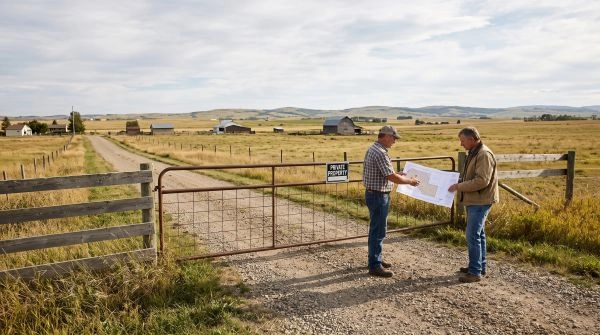
- Key Takeaways
- Easement Disputes Alberta Basics
- Primary Sources of Conflict
- Critical Evidence and Records
- Strategic Resolution Paths
- Modern Development Realities
- Proactive Property Protection
- Conclusion
- Frequently Asked Questions
- What is an easement dispute in Alberta?
- How do I know if an easement on my Alberta property is valid?
- What evidence is most important in an Alberta easement dispute?
- Can I block or move an easement on my land in Alberta?
- How are easement disputes in Alberta typically resolved?
- What should I do first if I am in an easement dispute in Alberta?
- How can I prevent future easement conflicts on my Alberta property?
Key Takeaways
- Easements in Alberta generate legal rights to access someone else’s property for certain uses, so knowing what’s on title safeguards land value and day-to-day enjoyment for residential, commercial, and agricultural lands. Make sure you’re very clear on which parcel is the dominant tenement and which is the servient tenement before you start making property decisions.
- Of course, proper registration with the Alberta Land Titles Registry is critical, as it renders easements enforceable against subsequent owners and gives public notice of location and conditions. Property owners can avoid surprises by maintaining a tidy, current file of titles, easement agreements, and surveys for each parcel they own.
- Whether it’s search for the trails of old ones or maintenance or blocked access, most easement disputes in Alberta stem from fuzzy lines and they can impact business, farming, or development. Properly drafted written agreements specifying responsibility for maintenance costs, access rights, and utility or zoning issues can avert many of these conflicts.
- Good evidence is crucial in any dispute, so property owners should assemble Real Property Reports, old and new surveys, land titles, and all written easement agreements. Documenting correspondence, notices, and incidents like access obstructions or encroachments can help support your claim or defense if negotiations break down.
- Alberta law provides a number of ways to resolve these types of disputes, beginning with direct negotiation and mediation and escalating to court litigation, which is typically slower and more expensive. Preparing a brief summary of the facts, evidence, and desired outcome can keep negotiations and mediation targeted and help ensure a realistic settlement.
- With further urban expansion and infrastructure projects, easements are more frequent and are an important factor in development and conservation as well as utility access. This means property owners should check all easement and municipal planning requirements prior to building, subdividing, or selling land. Periodic legal review and proactive conversation with neighbors, utilities, and municipalities can help preserve long-term property rights and reduce the likelihood of future disputes.
Easement disputes Alberta are battles concerning the right to use another’s land for a defined purpose, such as access, utilities or drainage. A lot of easement disputes arise from ambiguous land titles, historical agreements or evolution in the usage of the land. Neighbors can clash over shared driveways, pipeline routes, or utility corridors and what starts as a minor misunderstanding can become an expensive legal battle. In Alberta, easements tend to be connected to real estate transactions, farms and oil and gas locations, so seemingly minor matters can impact land price and utilization. To navigate these issues, it is useful to understand how easements operate under Alberta law and what recourse is available for resolution.
When disagreements arise over access rights, property boundaries, or registered easements, real estate legal advice can help property owners understand their rights and assess possible resolution options.
Easement Disputes Alberta Basics

Easements in Alberta are rights that allow one party to use part of another’s land for a fixed purpose, such as a driveway, utility lines, drainage, or access to a land-locked parcel. They lie atop ownership, so the landowner still holds title, but their use is constrained by the easement provisions. Rights-of-way are comparable and commonly for roads, pipelines, or power lines and can influence what you can build, plant, or fence. These arrangements appear on suburban city lots, commercial sites, farms, and ranches, and they can increase or decrease land value depending on how restrictive or advantageous they are. In Alberta, the rules on this are from common law and legislation such as the Land Titles Act, so local case law and provincial statutes both matter in a dispute.
The Government of Alberta provides an overview of the land titles system and the Land Titles Act, which helps explain how registered land interests are recorded under Alberta’s land registration framework
Legal Definitions
In every easement, the land that benefits is the “dominant tenement,” and the land that is burdened is the “servient tenement.” For example, if your field requires a road over a neighbor’s parcel, your land is dominant because it receives the access. Your neighbor’s land is servient because it must tolerate that use, even if title never changes.
| Type of easement | Typical use in Alberta |
|---|---|
| Utility easement | Power, gas, water, telecom lines and equipment |
| Access / road easement | Driveways, shared lanes, landlocked access |
| Conservation easement | Environmental or habitat protection |
| Drainage / sewer | Stormwater, irrigation, sewage lines |
| Pipeline / energy | Oil, gas, or product transport corridors |
Every easement must have a definite, restricted purpose. Typical examples are shared driveways between two residences, access roads to farm or oil sites, or buried utility corridors where they can enter to inspect or fix gear, sometimes without notice if it is in the agreement.
If the easement is written and registered on title, it generally automatically binds future purchasers. The new owners take on both the advantages and the restrictions, such as expense sharing and repair obligations.
Registration Systems
Central to easement disputes is registration with the Alberta Land Titles Registry because it transforms a private arrangement into a right that can be enforced against subsequent owners who purchased in good faith. About Easement Disputes Alberta Basics The registered easement appears on title as an encumbrance, providing public notice of its existence, general location and significant terms, such as who maintains a shared road or how wide a pipeline corridor is intended to be.
Property owners can use the Government of Alberta’s land title search resources to obtain title information and identify registered interests, including easements and other encumbrances.
When easements are not registered, the danger increases that a subsequent owner will not be bound by it, particularly in Alberta where prescriptive easements are not legally recognized. For example, a longtime informal use of a path or road, even over decades, does not, by itself, entitle a neighbor to a permanent right to cross your land. That gap commonly sparks disputes over access, who foots the bill to maintain a lane, or whether someone can close off a path that has been used for decades.
On rural land, this can become serious when a farmer, rancher, or energy operator loses access to a back field, a well site, or irrigation works because an unregistered arrangement is challenged. In cities and towns, conflict arises around shared driveways, parking, or utility corridors that owners may not have read closely at purchase.
Maintaining complete, current files for every parcel — registered titles, easement plans, maintenance clauses, any side letters — assists owners and attorneys in monitoring rights prior to strife solidifying. When disputes arise over scope, maintenance costs, or compensation, mediation or arbitration in Alberta is used first to reach a faster, lower-cost outcome. If that does not work, formal litigation necessitates lodging claims or defenses in court, which can be slow and costly for all parties.
Primary Sources of Conflict

Easement disputes in Alberta commonly arise from fuzzy boundaries, ambiguous rights-of-way or longstanding informal use of land that was never documented. Conflicts with residential neighbors, commercial developers, farm operators, utility companies and municipalities can reduce property value, derail a business plan or stall a project. Alberta law does offer solutions for easement violations or illegal encroachments, but the expense, delay and stress of a dispute can be significant for all parties.
1. Maintenance Costs
Most of the conflicts center around who foots the bill for maintenance, repairs, or improvements to a shared road, lane, drainage ditch, or fence. On rural land, one spouse may live on the home quarter, one may run the farm business, and a corporation may hold the equipment or lease. All feel they already ‘pay enough’, so a new bill for road gravel or culvert repair can trigger conflict.
A clear easement agreement should specify which party maintains what parts of the shared asset, how expenses are divided, and how work is approved. If one owner allows a road to wash out or a fence to collapse, it can ruin a neighbor’s crops, pasture, or adjacent structures and leave that owner open to liability or additional lawsuits. A simple chart on a scrap of paper recording every structure, such as a road, gate, fence line, or drainage, along with who is responsible for it and what percentage of costs they are sharing, can reduce arguments later.
2. Access Obstructions
Blocking or otherwise interfering with an easement is another frequent flashpoint. Think of a servient owner locking a gate, parking machinery in a laneway, planting trees in a right-of-way, or secretly moving a farm access road onto a neighbor’s land to save minutes or fuel. Disputes occur when one owner restricts truck traffic, limits hours of use, or attempts to reroute access without permission.
For disputes involving shared driveways, residential access routes, or property boundaries, residential real estate legal services may help homeowners understand the relevant property documents and available options.
Under Alberta law, the dominant tenement is entitled to the access the easement allows, unimpaired by unreasonable disturbance. If access is blocked or restricted, courts can mandate removal and award damages for lost use, increased haul distance, or delayed construction. Owners should document each occurrence with dated photos, notes about conversations, and copies of any notices or text messages. A clear record often informs how the dispute is ultimately resolved.
3. Boundary Creep
Boundary creep is when fences, sheds, shelterbelts, driveways or landscaping slowly encroach over the property line or into an easement. This is typical in rural Alberta, where ancient tree lines, natural features or informal trails have been considered boundaries for generations, even when the legal survey indicates otherwise.
Encroachments can result in trespass or forced removal claims under the Law of Property Act, particularly where new construction intrudes on a registered easement or a neighbor’s title. They cause issues when a property is sold, refinanced or sub-divided and a Real Property Report (RPR) reveals decades-old encroachments.
Accurate RPRs and up-to-date surveys are essential in unraveling where the line truly lies and if long-term usage is lawful or merely permitted. Digging through ancestral and even present day land titles, old agreements, or family notebooks can reveal historical grants or informal assurances and mitigate problems before they escalate to full-blown litigation.
4. Utility Burdens
Utility easements enable providers to run and repair water, gas, power, or telecom lines over private land, which can be close to homes, barns, or crops. They can argue about how wide the corridor really is, how often the utility can enter, how well the land is restored after digging, or whether the company can expand its infrastructure beyond what the owner expected.
In Alberta, these easements nest in a regulatory spider web that includes the Public Utilities Easements Act and specific approval conditions from regulators. Land might be owned by one family member, leased by another, and used by a third in an informal arrangement. Each may view the effects of a new power pole or buried line differently. Defining the easement terms in writing, any plans attached to it, and compensation clauses decreases surprise and post-hoc assertions of rutting, crop loss, or diminished development potential.
5. Municipal Zoning
Municipal zoning bylaws and planning decisions can rewrite how easements function or are even necessary. If land is subdivided or a development permit is filed, municipalities may demand new access easements, drainage rights, or utility corridors that traverse existing fields, yards, or commercial yards. Sometimes, municipalities will expropriate land or register easements for roads, storm ponds, or public utilities.
Conflict thrives where land has been informally farmed by a family for generations and one member thinks that they have a quasi-perpetual right to farm or operate there and zoning shifts to residential or commercial use instead. A modification on one parcel, such as raising a building pad, closing an old road, or shifting a ditch, can impact neighboring crops, roads, and livestock grazing areas and conflict with assumptions from previous unwritten agreements.
Owners who follow local planning notices, attend public hearings and examine proposed bylaws are positioned to identify effects on their easement rights and negotiate modifications or compensation in advance. Where rights-of-ways, long-term use or family expectations aren’t in writing, zoning changes can lay those gaps bare and make conflicts more difficult to settle.
Owners planning construction or subdivision can review the Government of Alberta’s municipal planning and development resources to learn more about planning documents and development appeal processes that may affect their property.
Critical Evidence and Records

In Alberta easement battles, compelling evidence frequently determines who is responsible and what damages, if any, are owed. Courts and arbiters want critical evidence and records, not speculation and hearsay, so the more your file resembles critical evidence, the stronger your case.
At a minimum, owners should collect surveys, title documents, easement agreements, RPRs, and any correspondence with the other party. These records are important whether you utilize mediation, arbitration, or an Alberta court, as liability and damages both depend on what you can prove. Hearsay evidence, such as “my neighbor said the utility company consented,” is typically flimsy and might not be permitted at trial. Concentrate on original documents and direct witnesses.
Keep a full set of correspondence: emails, letters, text messages, notices from municipalities, and any written consent or objections. In Alberta real estate disputes, ownership documents, agreements, and communications between the parties frequently reveal what they agreed to, what was modified, and when the disagreements began.
Alberta courts follow the relevant statutes, like the Land Titles Act, Residential Tenancies Act and Builders’ Lien Act, then review your critical evidence, listen to arguments and rule. You typically can’t read from a script on the stand, so instead you prepare by reading your file, preparing questions for witnesses and understanding how every record supports your narrative. This same package of evidence will come in handy in ADR, where a mediator or arbitrator will want to see well-documented papers.
| Evidence type | What it shows | Why it matters in easement disputes |
|---|---|---|
| Surveys / RPRs | Actual boundaries, structures, and easement locations | Helps prove encroachment or use beyond agreed areas |
| Title documents | Registered interests, including easements and charges | Confirms if the easement exists and on what legal terms |
| Easement agreements | Rights, limits, and obligations of each party | Defines scope of access, maintenance, and permitted changes |
| Correspondence/Notices | Course of dealing and attempts to resolve issues | Supports or challenges claims of consent, notice, or waiver |
Historical Surveys
Historic surveys are a good first place to look when a dispute hinges on where the easement lies on the land. Old plans indicate original lot lines, road allowances, and the location or footprint of an easement, like a shared driveway or buried pipeline, when it was drawn.
When a new survey or RPR does not square with the older plan, that discrepancy can reveal an encroachment or an unauthorized shifting of the easement corridor. For instance, a fence or garage now sits inside a utility right-of-way that was open on the original survey, or a pathway drifted from its recorded course. Lining up the old plan with the new, and then both with the recorded easement description on title, can point to where on-the-ground use has drifted away from the legal record.
If you live in Alberta and have an easement dispute that may go to trial or arbitration, it is wise to hire a licensed Alberta Land Surveyor to prepare or verify an RPR. A surveyor can explain how they measured boundaries, how they tied into historical data, and if the easement area is depicted correctly. This can trump a landowner’s hand-drawn sketch or photos.
Title Documents
Land title certificates in Alberta are pivotal records for any easement dispute as they record all registered interests on a parcel such as easements, restrictive covenants, and utility rights-of-way in favor of municipalities or utility providers. If an easement is not on title, then its legal status could be challenged, except if there is another legal basis for the easement, such as a prescriptive or implied easement under Alberta law.
Critical Evidence and Records Owners should review the title and all recorded instruments for any conditions, expiration dates, or other triggers on whether the easement still encumbers the land. An agreement may specify that access terminates when a project concludes or that the obligation changes if the lot is divided. Leaving out that wording can result in flimsy legal arguments.
A simple checklist can keep things clear: list each easement or related interest, its registration number, date, benefiting party, affected area, and key terms. Attach links or copies of each document to that list. This allows you and your attorney to identify holes, develop targeted witness interrogatories, and tell a concise story to a judge or mediator about what rights exist and how they were exercised.
Strategic Resolution Paths
Strategic resolution paths for Alberta easement disputes begin with clear facts. They typically examine surveys, titles, easement agreements, old correspondence, and photos or maps of land use. This helps figure out if the problem is a boundary mistake, abuse, clogged easement, or an ancient easement that shifted in use over time. Alberta law and local custom generally prefer ADR like negotiation, mediation, or arbitration to court first, as those paths tend to cost less and move faster. Whichever path you take, it helps to write up a brief summary of the dispute, the main evidence, and what you want for an end result, such as a smaller easement area, new usage guidelines, or restitution.
Direct Negotiation
Direct negotiation is typically the initial and often successful step when neighbors still communicate. Both sides define how they perceive the easement, where they believe the boundary lies, and what behavior constitutes ‘over use’ or ‘improper use,’ such as heavy trucks on a light vehicle access road. This type of discussion can clarify confusion, such as a fence constructed on the incorrect side of a survey line.
If the parties do make a deal, they should put it down in writing. It could be a brief contract, a revised easement agreement, or drawing affixed to a signed memorandum. It needs to outline any new access points, joint upkeep responsibilities, or modifications to hours and types of usage.
Clear timelines count. In black and white they can specify who’s going to shift a gate, or finish some gravel work, or take out some old machinery with each responsibility attached to a date to keep everyone honest.
Mediation Sessions
Mediation brings in a neutral third party who aids in steering the conversation and does not rule on the matter. In Alberta, mediation is popular in property disputes because it is confidential, process-flexible, and can be scheduled sooner than a trial date. It’s handy in situations where previous easements may have remained untested for decades, and now one property owner is convinced the use has exceeded the terms.
Mediation sessions are private, so sides can toss out suggestions without concern that each suggestion will be weaponized against them in court. Results could be a modified road maintenance schedule, policies on winter plowing, one-time or ongoing payments for additional wear, or more defined parameters for who can use the easement to cross and why.
Parties tend to benefit more from mediation if they come with a written list of priorities and fall-back options. For example, a landowner might rank goals as follows: stop heavy trucks, if not possible then limit hours, and if that fails then seek higher maintenance payments.
Court Litigation
Alberta litigation enters when negotiation and mediation reach an impasse or where critical legal rights are vigorously contested, like whether an easement was even valid to begin with. It follows a formal path. One party files a claim, both sides exchange pleadings and documents, they may go through questioning and interim motions, and if no settlement occurs, they present witnesses and evidence at trial for a binding court decision.
Alberta courts can award a few remedies in easement disputes. They can order, by way of injunction, a party to cease blocking an access road or removing structures that encroach on the easement. They may award damages for loss of use or may, in some cases, order an easement to be varied or, if the legal tests are met, discharged. These powers can settle any protracted dispute, but at genuine expense and time.
Litigation is typically the most costly and pressured route. Alberta’s typical two-year limitation period for property disputes means parties can’t wait forever before suing. The savvy solution is to consider negotiation, mediation, or arbitration first. Then, turn to court only when rights, evidence strength, and time limits warrant.
Modern Development Realities
Modern development realities Modern projects progress quickly, yet easement rights in Alberta still progress on court timelines, not building timetables. Whether it’s urban growth, infill projects, or new transport or utility corridors, they all rely on easements or rights-of-way. When cities add light rail lines, widen roads, or bury new water and fiber‑optic lines, they frequently have to create, widen, or realign easements across private land. Each alteration can change the way owners use driveways, yards, parking, or future development sites, and that can rapidly become a contention if assumptions aren’t explicit.
Developers and commercial property owners should consider commercial real estate legal guidance when easements may affect site access, construction plans, subdivision, or the intended use of a property.
Conservation easements and utility rights now inform many long-term plans. A conservation easement can freeze certain types of development to protect wetlands or wildlife, while a utility right-of-way can permit pipes or cables under a farm field or behind homes. In rural Alberta, these tools go hand-in-hand with very pragmatic questions about access roads, field entrances, and shared driveways between farms. An owner might want to put in a shed or new access lane, but a pipeline easement or conservation agreement terms might restrict those modifications.
Property owners who intend to construct, subdivide, or dispose of land must consider easements from the outset. A proposed condominium building can run into trouble if a drainage easement interferes with the optimal building footprint or a neighbor’s private access easement slices through the planned parking lot. Co-ownership, estate planning, and soaring land values throw more lines in the water, particularly when separate family members or investors are fishing for different prizes with the same parcel.
There is no prescriptive easement in Alberta, based on long, continuous use, so the rights typically arise from written grants, statutes, or obvious historical agreements. That’s even more reason to check title, easement agreements, municipal bylaws and subdivision rules prior to any major undertaking. Disputes end up in mediation, arbitration, or even online, with digital photos, survey files, and emails as your smoking guns. Landlord-tenant issues under the Residential Tenancies Act fit into this same modern picture, as shared driveways, parking rights, or storage areas can bleed into easement questions.
Proactive Property Protection

Proactive property protection means you do work in advance so easement battles are less likely to get going in the first place. In Alberta, it typically means clean land title, meticulous documentation, and consistent contact with any individuals who access or abut your property.
Property owners ought to routinely check on land titles, easement agreements and local bylaws, not just when an issue arises. That means looking at title at the Alberta Land Titles Office to discover which easements are actually registered, like access roads, utility corridors or drainage rights. Ancient fences, tree lines or beaten paths aren’t evidence of legal rights. This is crucial in Alberta because adverse possession, commonly referred to as “squatters’ rights,” has been eliminated and a long-standing use or misplaced fence does not alter the legal boundary. A country owner, for instance, could find that a gravel lane employed for the previous 30 years as a joint driveway isn’t actually recorded as an easement. By addressing this up front, the parties can put access in writing rather than fighting it out later when one owner sells or closes the road.
It assists in developing a comprehensive log of the utilization and maintenance of each easement. We’re talking notes, photos, and dates of activities such as grading a private road, clearing snow, repairing a drainage ditch, or ensuring access wasn’t blocked. If a delivery truck severs a buried utility line crossing your land, documenting what happened, who was on-site, and how it was repaired provides valuable evidence in case blame or cost is disputed down the road. Basic documentation of verbal agreements with neighbors or relatives, even signed emails, can eliminate “he said, she said” disputes about access or parking.
Good counsel at the outset usually is less expensive than conflict later. A real estate counsel who understands Alberta’s Land Titles Act and the surrounding regulations can prepare or update easement agreements so that they specify who can use the land, for what, when, and who covers maintenance. Explicit default rules about maintenance, liability, and notice of work reduce the potential for later disputes. This is particularly handy when multiple users, such as several homes on one access road or a combination of residential and farm users on the right of way.
Accessible and consistent communication with neighbors, utility companies and municipalities serves as a powerful backstop. Most boundary problems begin out in the country where fences, ancient access roads, or natural features were considered as lines for generations. Alberta law still allows the titled owner to assert the actual true boundary at any point, even if a fence has been sitting in the “wrong” spot for decades. By sharing survey plans, talking through planned changes, and putting agreements in writing, you can ensure that a small shift in a gate, driveway or path doesn’t grow into a full dispute. For city properties, this same principle applies to communal parking, roof access or service lines. When owners know their responsibilities under statutes like the Land Titles Act and, if applicable, the Residential Tenancies Act, they’re in a better position in any easement conversation.
Conclusion
Easement fights in Alberta can sap time, money, and peace of mind. The law in the area has bright line rules, but tiny facts shift results. A few photos of a road, or some old survey, or some email from a previous owner can swing the pendulum.
Most owners don’t want or need court. Most work them out through cool conversations, straightforward diagrams and concise, simple contracts in writing. For challenging cases, an Alberta land use lawyer brings true expertise.
To stay ahead, check your title, walk your land, and keep records up to date. For your next step, reach out to a real estate lawyer in Alberta, bring your key documents, and get a short focused review of your easement issue.
Frequently Asked Questions
What is an easement dispute in Alberta?
Easement disputes in Alberta occur when neighbors bicker about easement rights. In Alberta, these disputes typically concern access, services, or common driveways. Such disputes generally revolve around where the easement is located, the scope of it or its misuse.
How do I know if an easement on my Alberta property is valid?
Check your certificate of title and your surveys and registered easements from the Alberta Land Titles Office. A bona fide easement will be registered and will clearly define the land, parties, and permitted use. A property lawyer can tell you if it is enforceable.
What evidence is most important in an Alberta easement dispute?
Important proof includes the certificate of title, registered easement agreements, real property reports, surveys of the land, correspondence between owners, and photos or videos of use. These records assist in establishing the original purpose, actual use, and any excessive use or encroachment.
Can I block or move an easement on my land in Alberta?
Typically you can’t obstruct a registered easement. Any modification, relocation, or removal typically necessitates written consent from all impacted proprietors and usually the registration of amendments. Alberta courts may vary easements in limited situations. As always, consult with your lawyer first.
How are easement disputes in Alberta typically resolved?
Most disputes resolve with negotiation, mediation, or lawyer-led discussions. These means save time and costs over court. If that fails, the Court of King’s Bench of Alberta can interpret the easement, set limits, or make orders to prevent interference.
What should I do first if I am in an easement dispute in Alberta?
Collect your land title, surveys, real property report and any written agreements. Record the issue with dates and pictures. Do not resort to self-help, for example, blocking access. Then speak with an Alberta real estate or property litigation lawyer about your options.
How can I prevent future easement conflicts on my Alberta property?
Prior to purchase, go over title, surveys and easement plans with a real estate lawyer. Know where your easements are so neighbors don’t get upset. Maintain written agreements, re-survey after development, and get issues down in writing early to prevent misunderstandings and escalation.